Hua Hin holds more than beaches and seafood markets. A short drive from town sits one of the region’s most rewarding historic attractions, Mrigadayavan Palace. Built as a seaside retreat for King Rama VI in the 1920s, this teakwood palace blends royal history with quiet coastal beauty. For travelers looking for things to do in Hua Hin beyond the shoreline, a visit here offers a rare look at Thailand’s early twentieth century royal life, set against sea breezes and shaded gardens.
The Story Behind Mrigadayavan Palace
King Vajiravudh, known as Rama VI, suffered from rheumatoid arthritis in the 1910s. His physician recommended a warm, airy seaside climate to ease his condition. The king first considered Chao Samran Beach, but the site lacked fresh water and sat close to a fishing village. He chose a quieter stretch of coast instead, an area locals called Huai Sai, meaning hog deer stream, for the animals once found there.
Construction began in 1923 and finished the following year. The king named his new summer home Mrigadayavan, a reference to the deer park in Sarnath, India, where the Buddha delivered his first sermon. He stayed at the palace only twice, once in 1924 and again in 1925, shortly before his death. The palace stood empty for three decades afterward, until the Border Patrol Police and the Fine Arts Department began restoration work in the 1980s. The Mrigadayavan Palace Foundation, established under the patronage of the king’s daughter, Princess Bejaratana, now oversees its upkeep.
Architecture That Still Draws Visitors Today
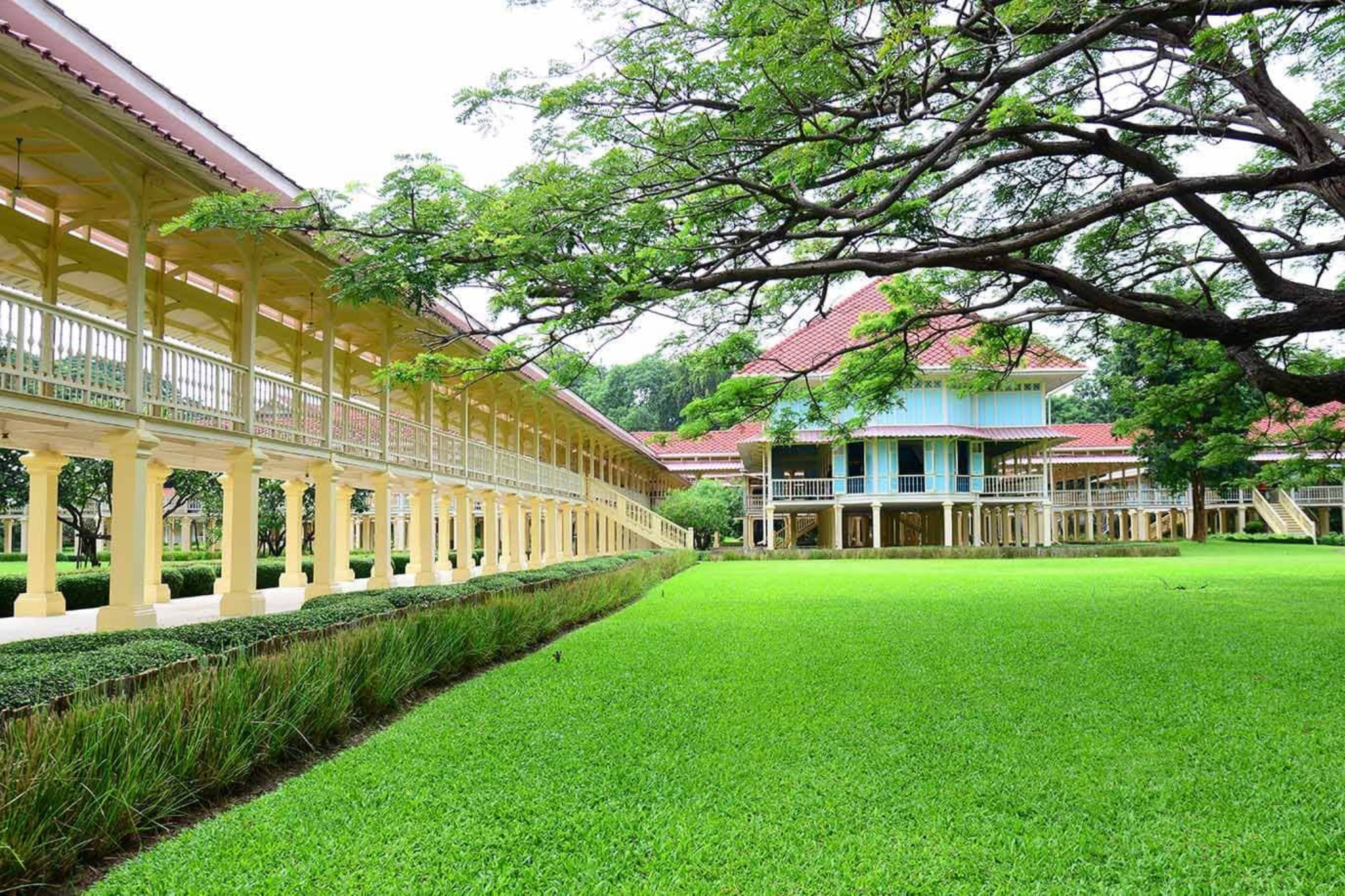
Mrigadayavan Palace consists of a series of teak buildings raised on concrete pillars and linked by long covered walkways. Italian architect Ercole Manfredi carried out the king’s own sketches, designing tall shuttered windows and open corridors to maximize airflow. The layout runs north to south along the beach, letting sea breezes pass through during the day and cooler mountain air move through at night.
The result feels different from other Thai royal residences. Instead of ornate stone and gold, the palace favors light teak wood, patterned fretwork, and an open, functional design suited to the tropical coast. Walking the corridors today, visitors pass the king’s personal chambers, the queen’s quarters, dining pavilions built for both Thai and Western meals, and a bathing pavilion once used before evening swims in the sea.
What to See Inside the Palace Grounds
A museum inside the compound displays artifacts from King Rama VI’s life, including personal belongings and furniture preserved from his stay. Guided tours run regularly and explain the layout, history, and small details behind each building’s function.
• The English garden near a large rain tree offers a shaded spot to rest between buildings
• A tea house serves afternoon tea and light snacks in a setting close to the original grounds
• A museum shop sells Thai sweets and souvenirs tied to the palace’s history
• A nature trail through the surrounding coastal forest suits visitors who want a slower walk after the main tour
Best Time to Visit Mrigadayavan Palace
The palace grounds open Friday through Sunday from 9 am to 4 pm. Thursdays are reserved for school and university groups with advance booking, and the site closes Monday through Wednesday. Mornings tend to be quieter and cooler, which makes early visits more comfortable for walking the full grounds. Modest dress is required as this remains a royal site, and sarongs are available to rent at the entrance for visitors who need extra coverage.
Entrance fees stay modest for what the visit offers, with different rates for adults, university students, and secondary school students. Because the palace sits inside a military camp, visitors pass through a checkpoint before reaching the parking area, so it helps to bring identification.
Why Mrigadayavan Palace Belongs on Your Hua Hin Itinerary
Among the many attractions in Hua Hin, Mrigadayavan Palace stands out for combining history, architecture, and a genuinely peaceful setting. It works well alongside other things to do in Hua Hin such as the old railway station, Cicada Market, or a morning at Khao Takiab. Pairing a palace visit with a slower coastal day gives a fuller sense of the area beyond its beaches and resorts.
Photographers tend to appreciate the early morning and late afternoon light against the teak buildings and sea view. History enthusiasts get a rare, well preserved example of how Thai royalty once lived along this coast. Families often enjoy the open grounds and nature trail as a break from busier stops in town.
How to Get to Mrigadayavan Palace and Where to Stay in Hua Hin
The palace sits roughly 15 kilometers north of Hua Hin, between the town and Cha-am. A private car or taxi remains the easiest way to get there, taking around 20 to 30 minutes depending on traffic. Travelers without a car can catch a local bus running between Cha-am and Hua Hin and ask to be dropped near the palace entrance.
Mrigadayavan Palace remains one of the most memorable historic attractions near Hua Hin, offering a quiet window into royal history against a coastal backdrop. After a morning spent exploring its teak corridors and gardens, The Yana Villas offers a comfortable base nearby to rest and continue discovering the best things to do in Hua Hin at an easy pace.
Frequently Asked Questions About Mrigadayavan Palace
Q: Where is the Mrigadayavan Palace located?
Mrigadayavan Palace sits on the coast between Cha-am and Hua Hin, inside the grounds of the Rama VI military camp, about 15 kilometers north of central Hua Hin.
Q: What days is Mrigadayavan Palace open?
The palace opens to the public Friday through Sunday from 9 am to 4 pm. It closes Monday through Wednesday, and Thursdays are reserved for pre-booked school groups.
Q: How much does it cost to enter Mrigadayavan Palace?
Entrance fees are modest, with separate rates for adults, university students, and secondary school students. Dress should be modest, and sarongs are available to rent at the entrance.
Q: Can visitors go inside the palace buildings?
Yes, sections of the palace are open to the public, including a museum with artifacts from King Rama VI’s life. Some areas may be closed at times due to ongoing restoration work